Semigloss vs. Thermal Paper: Which One Does Your Business Actually Need?
July 23, 2026
Labels feel like a minor detail until you’re stuck with ones that won’t scan at the checkout, peel off during shipping, or fade out before the product even reaches the customer. At that point, a “minor detail” becomes a very real operational headache.
So if you’re trying to choose between semi gloss and thermal paper, here’s what you actually need to know.
What Semi gloss Paper Is?
Semi gloss sits in the middle ground between matte and full gloss. The surface is smooth and lightly coated, clean enough to print sharp detail and vibrant color, without the blinding reflectiveness that full gloss can produce under certain lighting.
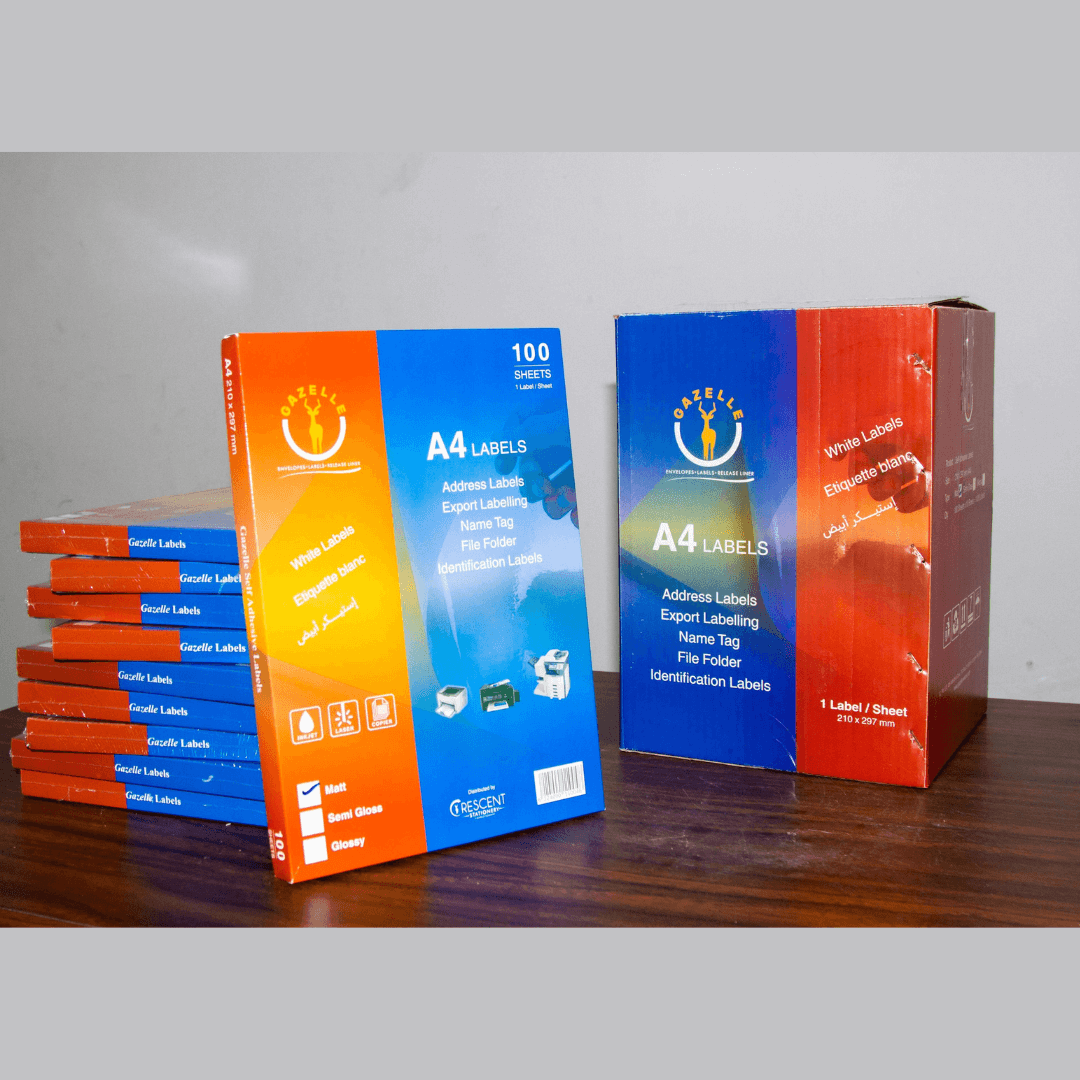
It needs an external ink source to print: an inkjet, a laser, or a commercial flexographic press. That coating is what makes the difference. Colors come out richer, text comes out crisper, and the overall label looks like it belongs on a product rather than an afterthought.
As one of the established semi gloss and thermal paper manufacturers in Egypt, Gazelle Label produces semi gloss stock across a wide range of commercial applications: retail packaging, brand labeling, logistics, and more.
Applications of Semi gloss Label
- Retail shelves where your label is doing part of the selling.
- Food and beverage packaging where a clean, finished look is expected.
- Brand labels where color accuracy matters and design detail needs to come through properly.
- Promotional labeling where the visual impression is the whole point.
If the label is something a customer is going to see, pick up, and judge your product by, semi gloss is what gets that job done.
What Thermal Paper Is
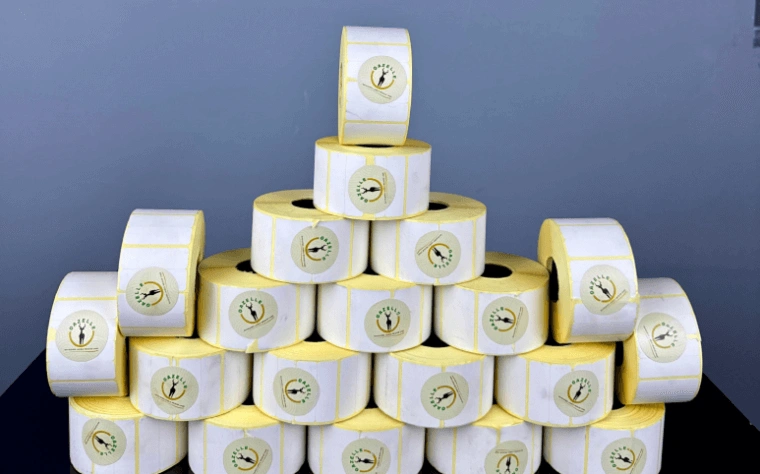
Thermal paper doesn’t need ink at all. It has a heat-sensitive coating that reacts directly to a thermal print head, producing a clean image without cartridges, ribbons, or any of the consumables that come with traditional printing.
The result is fast, simple, and low-maintenance, which is exactly why it’s become the default for high-volume functional labeling across so many industries.
Semi gloss and thermal paper manufacturers in Egypt like Gazelle Label supply thermal in two main types, direct thermal and thermal transfer, each with different durability characteristics depending on what the label needs to survive.
Application of Thermal Labels
- Shipping and courier labels that need to print quickly and scan reliably every single time.
- Warehouse and inventory tags where volume is high and design isn’t a factor.
- Point-of-sale receipts and price stickers.
- Food service labels for dates, batch codes, and expiry information.
- Healthcare settings where accuracy and speed both matter, specimen labels, patient wristbands, pharmacy dispensing.
If the label is there to be read, scanned, or tracked rather than admired, thermal is almost always the smarter, more efficient choice.
The Practical Differences
- Print method: semi gloss needs external ink, thermal uses heat alone.
- Color: semi gloss handles full color, thermal is typically black on white.
- Durability: thermal transfer is tough, direct thermal less so in harsh conditions.
- Cost: thermal has lower ongoing running costs, semi gloss costs more per label but delivers a completely different result.
- Speed: thermal wins for volume, semi gloss is better for quality batch runs.
So Which One Is Right for You?
It comes down to what the label actually needs to do.
Brand-facing label that a customer will see and handle? Semi gloss. Operational label moving through a warehouse or being printed at a counter a hundred times a day? Thermal.
A lot of businesses run both, semi gloss on the product and thermal on the logistics side. That’s not overcomplicating things. That’s just using the right tool for each job.
Working with reliable semi gloss and thermal paper manufacturers in Egypt means you’re not guessing at material quality or hoping it works with your setup. Gazelle Label carries both, and the experience to help you figure out which one fits before you commit to a full order.
Conclusion
This isn’t really a debate about which paper is better. It’s about which one is right for what you’re actually trying to do. Semi gloss handles the brand work. Thermal handles the operational load. Get that match right, and your labeling runs in the background the way it should, no reprints, no scan failures, no labels giving up before the job is done.
FAQs
Can thermal labels handle outdoor or cold storage conditions?
Direct thermal labels struggle with heat, UV exposure, and moisture; they’re not built for those environments without additional lamination. Thermal transfer labels are a much better fit for anything that needs to hold up in tough conditions.
Does semi gloss paper work with any printer?
It works with inkjet, laser, and commercial flexographic setups, but the coating needs to match your printer’s requirements. Not every semi gloss stock is compatible with every print method, so it’s worth confirming with your supplier before placing a large order.