Custom Printed Barcode Labels: Why Material Choice Matters More Than Design
July 22, 2026
A barcode that scans on the first try goes unnoticed. One that does not become everyone’s problem.
Most businesses treat barcode labels like a design choice. The size. The layout. How much space is left for text?
But the real decision is the material underneath.
That is what decides whether the label survives a freezer, a forklift, or six months on a shelf.
And that is exactly why choosing custom printed barcode labels properly from the start saves far more time than dealing with scan failures later.
The Materials That Actually Matter
Not all barcode stickers are built for the same job.
- Eco Thermal: cheapest, short-term use
- Thermal Top Coated: better fade resistance
- Matt Paper: clean print, general retail
- Semi Gloss: sharper contrast for scanning
- BOPP (plastic): tear-resistant, water-resistant
Direct thermal materials print without ink or ribbon. So the cost stays low.
But they fade. Usually, within six to twelve months if exposed to heat or sunlight.
That is fine for a shipping label that only needs to survive one trip.
It is the wrong choice for inventory tags that have to last through a full storage cycle.
BOPP changes that.
It is a plastic film, not paper. So it handles water, tearing, and rough use far better.
That is exactly why it is used for labels going into cold storage, humid warehouses, or anywhere a paper label would start curling and peeling.
And that is the real point.
It is not about choosing the most premium material.
It is about choosing the one that can survive for as long as the label actually needs to.
Where to Source Reliable Custom Printed Barcode Labels
Material selection only works if the supplier can actually deliver the size and stock a specific operation needs.
A retail counter printing small price labels doesn’t need the same roll as a logistics warehouse tagging pallets. That range, small format for point-of-sale, large format for shipping and asset tags, is where most label suppliers fall short. It’s also exactly where custom printed barcode labels need to be sourced from a manufacturer that stocks the full range, not just the popular sizes.
Where Crescent Stationery Fits In
This is the range Crescent Stationery was built to cover.
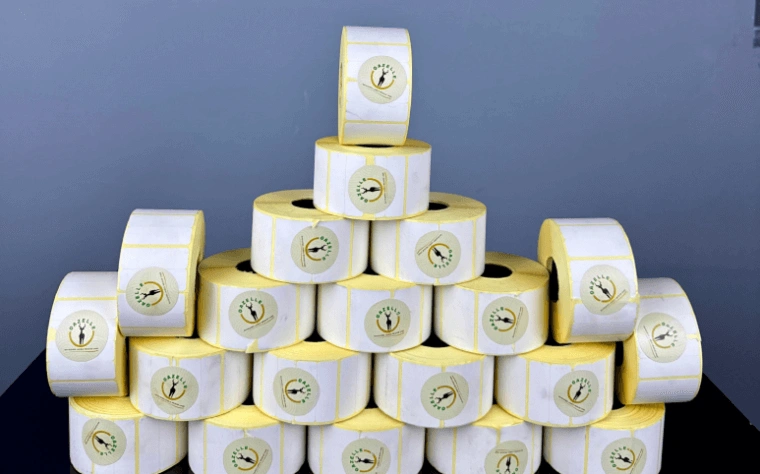
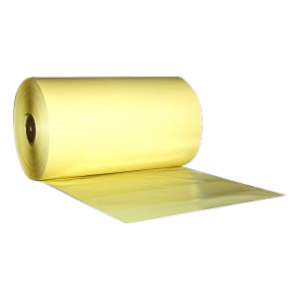
As a stationery brand under the Gazelle Label group, Crescent Stationery manufactures barcode stickers across Eco Thermal, Thermal Top Coated, Matt Paper, Semi Gloss, and BOPP materials, in sizes from 25 x 38mm up to 150 x 100mm, with custom sizing available beyond that range. Release liners come in yellow or white glassine, which matters more than it sounds. Consistent liner quality is what keeps labels feeding smoothly through automatic applicators instead of jamming mid-run.
Crescent Stationery manufactures high-quality self-adhesive labeling solutions for retail, logistics, manufacturing, healthcare, pharmaceutical, and commercial applications. Our portfolio includes barcode sticker rolls, A4 label sheets, and customized labeling solutions, supported by in-house converting capabilities and a commitment to quality and fast delivery.
FAQs
What’s the difference between direct thermal and BOPP barcode labels?
Direct thermal is cheaper and fades within months, while BOPP is a durable plastic film resistant to water, tearing, and rough handling.
How long do thermal barcode labels last?
Standard direct thermal labels typically last six to twelve months before fading, depending on heat and light exposure.
Do barcode labels actually reduce scanning errors?
Yes. Barcode labels standardize data capture, cutting down on the manual entry mistakes common in handwritten or typed inventory systems.
What sizes are available for custom-printed barcode labels?
Sizes typically range from small 25 x 38mm labels up to large 150 x 100mm formats, with custom sizing available for specific needs.
Where can I order custom printed barcode labels in Egypt?
Crescent Stationery, part of the Gazelle Label group, manufactures custom printed barcode labels across multiple materials and sizes for businesses in Egypt.
Conclusion
A barcode label isn’t just ink on paper. It’s a material choice that decides whether the scan works six months from now.
Get the material right, and nobody downstream ever has to think about it.
That’s the entire point of a label that works.